








🎯Too Long; Didn’t Read
-
Buy based on your engine size (gas vs. diesel) and choose a unit with extra headroom for cold weather and older batteries.
-
Ignore hype like giant “peak amps” numbers and prioritize real-world build quality (thick cables, strong clamps) plus essential protections (reverse polarity, spark-proof, over-current, over-temp).
-
Capacity is best compared in watt-hours (Wh), and USB-C PD wattage determines how fast it recharges.
-
Combo models add a tire inflator, but trade portability for convenience—airflow (L/min) matters more than “max PSI.”
-
Finally, keep it ready: recharge every 2–3 months, store it safely in a case, and avoid common connection and cranking mistakes.
A dead car battery always seems to fail at the worst moment - late nights, bad weather, when you’re already late. That’s why a portable jump starter has become essential. Forget waiting for a stranger with cables. A modern unit can get you going quickly. Many also work as a power bank; some even include an air compressor for tires.
This guide cuts through the noise. It explains which specs actually help and which are just gimmicks. Necessary safety features are highlighted. Recommendations are provided based on different needs. The goal is a single purchase that ensures reliability every time you start the car.
How to choose a jump starter?
-
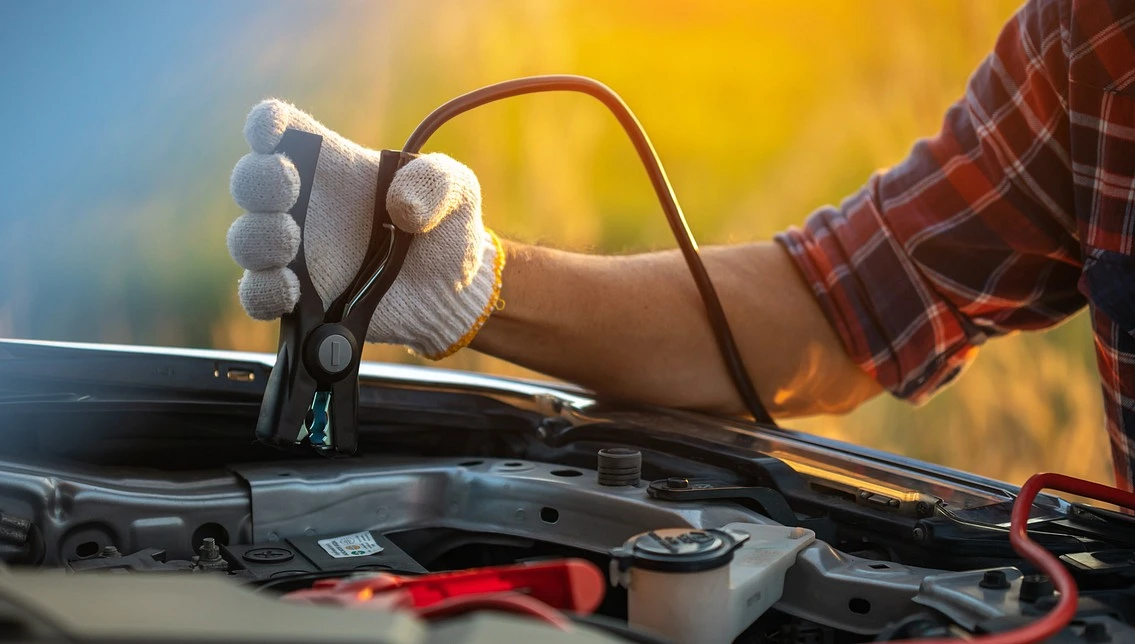
Start with the vehicle’s engine - size and type matter. Most units specify a maximum, like “up to 8.0L gas.” Go for one with a buffer, particularly for diesel engines, older batteries, or cold-weather starts. Avoid fixating solely on peak amps. Instead, judge the build: thick cables, solid clamps, and proven safety features - reverse polarity protection, spark-proof design, over-current and over-temperature safeguards.
-
Next, evaluate battery capacity, measured in watt-hours or milliamp-hours, and how quickly the unit recharges. USB-C Power Delivery enables fast topping up, which encourages regular maintenance. Some models combine a jump starter with an air compressor for added function, though that means extra bulk and weight.
-
Finally, consider the warranty, whether a case is included, and genuine portability. If the unit is too clunky, it’ll just gather dust at home instead of staying in the car where it’s needed.
What specs actually matter (and which are marketing)?
Some specs genuinely matter; the rest is often window dressing.
-
Starting reliability comes down to real cranking output, cable thickness, and clamp quality—not a giant “peak amps” figure. Think of peak amps as useful for quick comparisons, but that’s it: a split-second maximum, not what the unit actually delivers during a start. Always check the engine-size rating and assume you’ll need extra margin, especially in cold weather or with an aging battery.
-
For power banks, capacity in watt-hours beats milliamp-hours every time—mAh gets quoted at a lower internal voltage, which is misleading. Focus on USB-C PD wattage: it determines recharge speed and which devices the bank can actually run.
-
With combo jump-starter-inflators, airflow in liters per minute usually tells you more than “max PSI.” That PSI number is too easy to inflate.
Best jump starters for drivers
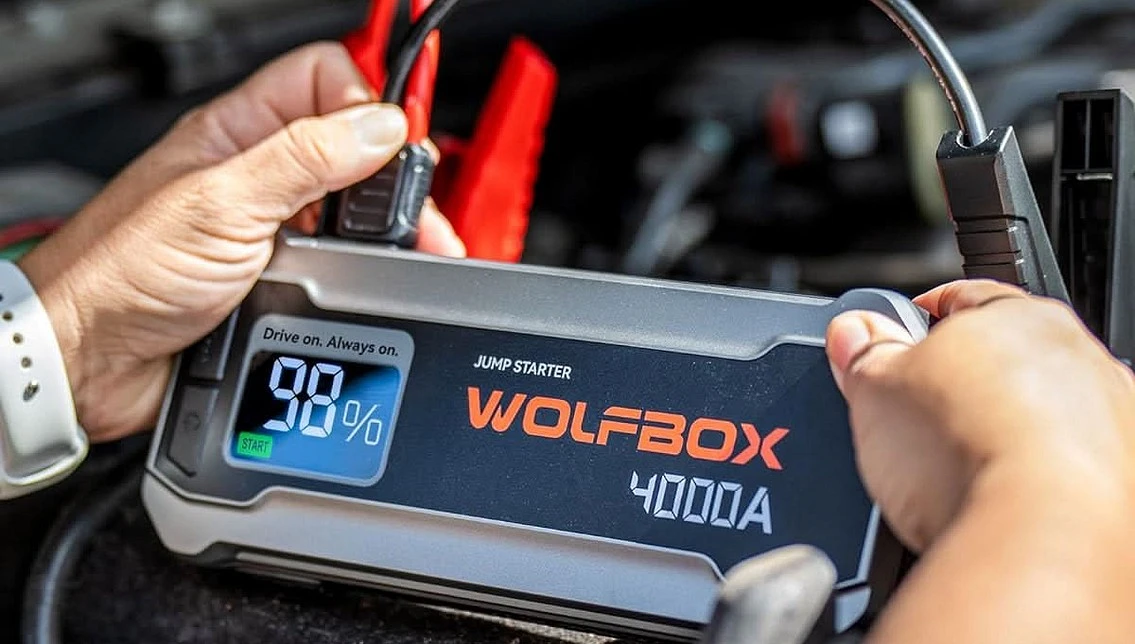
WOLFBOX MegaVolt24 Jump Starter (4000A)
The WOLFBOX MegaVolt24 Jump Starter (4000A) targets drivers needing serious battery backup that stashes easily in a glovebox. Its 4000A peak cranks over 12V engines up to 10 liters, gas or diesel - suited for daily cars, hefty SUVs, and pickups.
This unit also functions as a portable power bank. The 24,000mAh battery supports PD 65W bi-directional fast charging. Phones and tablets get a rapid top-up, useful for long drives.
For emergencies, a flashlight offers three settings: steady, strobe, and SOS. An LCD screen displays real-time status: "IN" indicates the jump starter is charging, while "OUT" shows it's powering another device.
Wolfbox MegaVolt 24Air (4-in-1 Jump Starter + Air Compressor)
The Wolfbox MegaVolt 24Air packs a roadside rescue into one compact unit. Think of it as a four-in-one emergency fix: dead batteries, flat tires, dead phone batteries, and dark nights.
Its beefy 24,000mAh battery delivers a serious jolt - up to 4000 amps peak. That’s enough to crank over 12V gas or diesel engines as large as 10 liters. Under the right conditions, you could get maybe forty jump starts from a single charge.
For tires, the integrated compressor moves 45 liters of air per minute. It handles pressures up to 160 PSI. As a power bank, it offers 65W USB-C fast charging to revive devices quickly.
Additional features include a 400-lumen emergency light, multiple power outputs, and IP64 water/dust resistance. Built-in safety protections are standard, and this standard applies to all WOLFBOX products.
Wolfbox MegaVolt16 Air (2-in-1 Jump Starter + Air Compressor)
Dead simple solution: one device instead of two. The Wolfbox MegaVolt16 Air crams a 3000A jump starter and a 160 PSI air compressor into a single unit. It kills two problems - a dead battery or a soft tire - without the trunk clutter.
This thing is built for repeat use. Its 16,000mAh core can reportedly inflate up to 45 tires per charge. Actual numbers vary with tire size and conditions. It also tops up phones via USB-C fast charging. A 400-lumen emergency light cuts through a dark roadside.
The result is a definitive trunk staple. It serves the daily commute, the long haul, and the family minivan. Power and tire support are consolidated. The redundancy of separate tools is eliminated.
WOLFBOX MegaVolt16 Jump Starter (3000A)
The WOLFBOX MegaVolt16 Jump Starter (3000A) delivers reliable backup power, avoiding excess bulk. Its 3000A peak rating handles 12V engines up to 8.0L - a practical rescue for most sedans, crossovers, and numerous SUVs.
Beyond jumps, the 16,000mAh battery acts as a power bank. PD 65W fast charging refuels phones or tablets quickly, a useful feature on the road.
For safety, it packs a 3-mode flashlight: steady, strobe, or SOS. Storage isn’t fussy; it stays ready in temperatures from -4°F to 140°F, making year-round trunk storage viable.
WOLFBOX MegaVolt16 Jump Starter
The WOLFBOX MegaVolt16 Jump Starter remains the same driver-focused platform. However, the UK “Ultimate” bundle packages it with a 67W Fast Charger. This isn't just an accessory - it transforms recharging. Top up the unit reliably at home or during a quick pit stop.
WOLFBOX’s UK store presents two clear choices: “the Basic” or “the Ultimate.” The latter includes that essential fast charger.
The MegaVolt16 core is built to handle roadside realities. It’s rated for 8L / 12V vehicles, delivering 3000A peak power for a start. This device functions as a standalone power bank for electronics alongside its primary jump-start duty. Notably, the UK listing now supports the entire package with a Lifetime Warranty. The bundle essentially upgrades the unit from an emergency tool to a sustained, worry-free system.
Bundle or standalone?
Bundles deliver a complete kit, plain and simple. You buy it, it’s ready. Take the WOLFBOX UK MegaVolt16 “Ultimate.” It packs a 67W fast charger. That’s key - no scrambling for a compatible plug. Your jump starter maintains charge faster, consistently. Crucial if you don’t own a high-watt USB-C charger already.
Go standalone for the lowest upfront cost. Also choose it when you’ve already got the gear - say, a quality USB-C PD wall charger. This route fits those picky about their equipment. You stick with your trusted cables, your known chargers.
Summary: Bundles mean convenience. Immediate readiness. Standalone offers flexibility and saves cash, but only if you’re already equipped.
Safety & protections checklist
A good jump starter should include built-in protections that reduce user error and protect your vehicle’s electronics. Use this safety checklist before you buy—and again before you jump:
-
Reverse-polarity protection (alerts or prevents use if clamps are swapped)
-
Spark-proof / anti-spark design (reduces arcing when connecting)
-
Short-circuit protection
-
Over-current protection (prevents excessive draw)
-
Over-voltage protection (helps protect sensitive electronics)
-
Over-temperature protection (shuts down if it overheats)
-
Low-voltage protection (prevents over-discharging the jump starter)
-
Clamps/cables rated for the unit’s power (thicker is generally better)
-
Clear indicators (battery level and error lights/messages)
Practical tip: never clamp onto damaged terminals, keep clamps from touching each other, and let the unit cool if cables feel hot.
Maintenance & storage tips
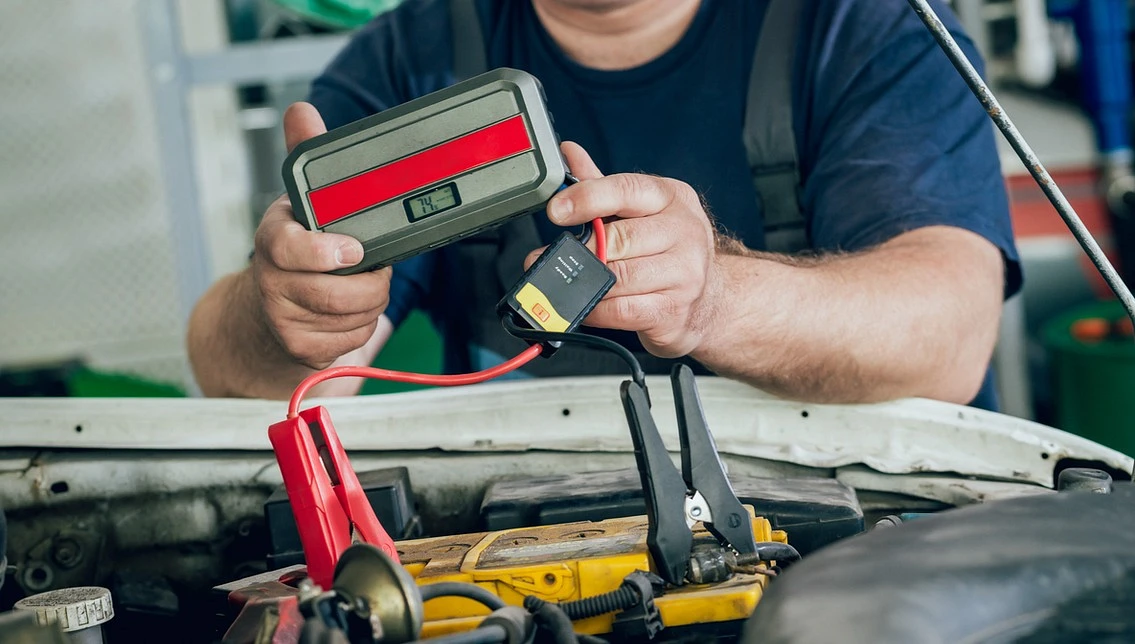
A jump starter works in an emergency only if it’s charged and ready.
Think of it as backup gear - maintain it.
-
Top off the charge every couple of months, or monthly when it’s brutally hot or freezing.
-
After any use, recharge it immediately.
-
Store it in its case. This keeps the clamps from touching tools or metal in the trunk and shorting out. Don’t leave it baking on the dashboard; extreme heat and deep cold sap the battery. If it stays in the car year-round, pick a stable spot - under a seat or in the trunk. Check the charge more frequently in winter.
-
Wipe the clamps clean and dry. Remove any corrosion. Occasionally inspect the cables for cracks and verify the unit still takes a full charge.
-
For models with USB-C PD: a quality charger and cable matter. Cheap ones can mean slow or incomplete charging.
Common mistakes to avoid
Jump-start failures typically trace back to basic errors.
-
Connect the clamps correctly - reversing them risks frying cheaper units, even with safeguards.
-
Ensure clamps grip clean metal firmly; avoid plastic covers, thick paint, or heavily corroded terminals. A nearly empty jump starter guarantees trouble. Always check its charge before a long trip.
-
Once powered, never let the clamp tips touch—this can short the unit or trigger a shutoff. When cranking, use short bursts of three to five seconds. Pause between attempts to prevent overheating. If the car refuses to start, further attempts rarely help. The issue likely lies deeper—battery, starter, or alternator.
-
Finally, storing the device forgotten in a trunk for a year drains it useless. Dead emergency gear offers no help when needed.
❓FAQ❓
Can a jump starter revive a completely dead battery (0 volts)?
Some models have a “boost” or “force” mode that can start a vehicle with very low voltage, but a battery that’s internally failed may still need replacement.
Will a jump starter damage my car’s electronics?
Quality units with proper protections are designed to be safe, but incorrect connections or using a damaged unit can still cause problems—follow the manual closely.
How many jump starts will I actually get per charge?
It varies widely with engine size, temperature, and battery condition; a small car in mild weather may allow many starts, while a cold, large engine may allow only a few.
How long should I wait after connecting before I crank the engine?
If the battery is very weak, waiting 30–60 seconds can help stabilize voltage before starting.
Is it safe to leave a jump starter plugged into the car’s 12V outlet?
Generally no - most car outlets turn off or provide limited current, and you can accidentally drain the car battery; charge it at home instead.