









🎯Too Long; Didn’t Read
-
Easiest planning: July–August (most reliable weather + access).
-
Best balance: late Aug–mid Sept (warm, active, usually less chaos than peak foliage).
-
Fall color: starts north/high first, shifts south/low; nights cool fast; peak weeks = crowds + higher prices.
-
Spring: mud season (March–April); high peaks can stay icy into early June.
-
Water: best mid-summer; September can still work but evenings get chilly.
-
Skiing: most consistent in Jan–Feb; winter road closures can limit access.
Climate in Vermont by season: what to expect
Spring: from mud to green trails
Vermont spring? Unpredictable. Thaw one day, below freezing the next.
March and April roll in - snowmelt, rain. Ground gets soaked, quick. Trails turn to mud.
Green Mountain Club puts it plain: stay off the mucky stretches. Heed the seasonal closures. Wet terrain ruts easy; once that starts, trail damage picks up speed.
Higher up, Mansfield, Camel’s Hump - ice and snow can hold on through May, sometimes into June.
Down in town, different story. Coffee shops hum again, museums unlock their doors. First roadside stands begin showing up.
Summer: warm days, lakes, and being outside
Summer’s the predictable pick. Most trailhead roads and campgrounds are open, daylight runs long, and service schedules stay steady.
June falls in between. Mountains hold dampness, lake water hasn’t warmed up much. Not quite full summer.
July and August deliver the most consistent conditions. Swimming, kayaking, camping, long bike rides - all of it clicks without much fuss. The daily loop sorts itself: morning activity, midday water, evening town. Fewer backup plans needed.
Still, quick downpours and thunderstorms roll through. For day trips, keep a light rain jacket in the car and an extra pair of sneakers. Soggy shoes ruin an afternoon.
Fall: peak foliage and cooler evenings
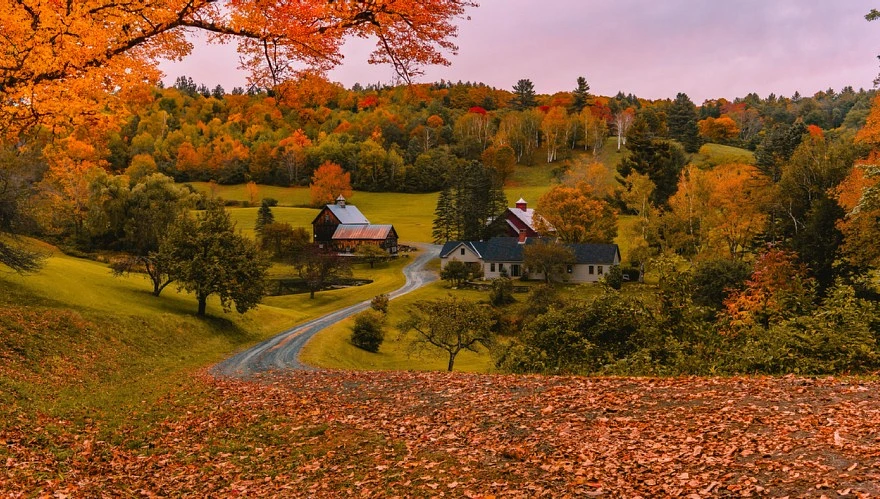
Fall in Vermont is driven by two things: foliage and colder nights. Color usually starts earlier up north and at higher elevations, then shifts toward valleys and southern areas. State travel guides describe an early-to-mid September start in northern and higher zones, with color continuing into October in lower and more southern spots.
Days can feel good for walking around, then temps drop fast after sunset. Late October can bring early frosts, and in some places a first snow. Fall works well because you can mix active days with slower drives between towns. Early in the season, a lot of farm stands are still open, but it’s worth checking hours ahead of time.
Best timing by interest: match the season to the trip

For hiking and biking: less mud, more views
For hiking, trail condition matters most. In spring, it’s better to skip wet routes. The Green Mountain Club points out that during mud season, soft ground takes a beating, plants get damaged, and some routes are officially closed.
A practical rule: wait until the ground dries out and stops feeling springy underfoot. Lower elevations dry sooner; higher ones later, sometimes closer to June. Summer and early fall are also solid for biking. Fewer chances to get stuck in mud, more dry gravel roads, more reliable traction. September adds cooler air, so long climbs feel easier.
For water time: lakes, kayaks, and beaches
Water plans in Vermont depend a lot on temperature and wind. In June, swimming often feels brisk, but kayaks and SUP are great: fewer scorching hours, fewer launch lines, calmer pacing. The most reliable beach stretch is usually mid-summer, when the water is clearly warmer and warm days stack up.
For family spots, people often pick managed beaches on Lake Champlain and smaller lakes with parking and lifeguards. In September the water can still hold warmth, but cooler evenings make layers part of the deal again. For kayaking, wind and wave forecasts matter, especially on bigger water.
For winter sports: ski season and snow
Vermont’s winter season isn’t locked to the calendar, but it generally starts in late November or December and runs through March, sometimes longer. The most stable conditions tend to land in January and February. For specific dates, Ski Vermont keeps a seasonal list of projected resort openings.
The upside of a winter trip is the built-out setup: rentals, schools, shuttles, gear storage. The downside is how much you’re at the mercy of roads and weather. Vermont’s Department of Health specifically reminds drivers to prep vehicles for winter and stay alert to road conditions.
Simple logic helps: the closer you go to mid-winter, the less it feels like a gamble.
Events and vibe: when Vermont feels most active

Festivals and fairs: what to do besides nature
An events calendar helps mix outdoor time with city stuff, especially in summer. In Burlington in early June, the Burlington Discover Jazz Festival runs; the organizer lists June 3–7, 2026, with venues around downtown.
Late August into early September is fair season.
The Champlain Valley Fair in Essex is scheduled for August 28 to September 6, 2026, with exhibits, rides, and concerts.
Those weeks also work for short trips to lakes and farms: nature during the day, fair at night. If your calendar is packed, book lodging early. Around big events, places fill up fast.
Maple season: traditions, sugarhouses, tastings
Maple season clusters around late winter and early spring. Vermont maple materials emphasize that March is the core of sugaring season: sugarhouses open up, run tours, and offer syrup and syrup-based treats.
A key marker is Maple Open House Weekend, usually in late March, tied to the Vermont Maple Sugar Makers’ Association.
Dates depend on weather. Cold nights and warmer days keep sap flowing. When you’re planning, remember that farm tours often run on set schedules and can be seasonal. It’s easier to build the trip around one or two farms instead of trying to cover the whole state in a day.
Leaf peeping: routes for seeing foliage
Leaf peeping in Vermont is a trip where timing matters, plus road discipline. The basic pattern: the north and higher elevations change first, then the wave moves toward southern areas and valleys. The best weeks often land in late September and early October, but it shifts every year.
Planning works best by region: one day in the Northeast Kingdom, another in the central valleys, another in southern towns. Also, small roads can get slammed. The Associated Press described a case in Pomfret where, because of the tourist surge, a road was temporarily closed to non-residents until mid-October.
Respecting private property and parking rules isn’t optional.
Budget and comfort: prices, crowds, and lodging availability
High season
Vermont’s busy season hits with summer break and peak leaf color. Lodging in Burlington, Stowe, and the valley hotspots? Snapped up months prior. Upside: cafes keep later hours, tours run daily, and securing rentals or a guide turns effortless. Tradeoff: viewpoints clog up, small-town streets queue - weekends especially.
Two things decide if the period goes smooth: booking early and a schedule that leaves breathing room; cramming backfires. Routes with serious driving? Build in extra time for parking.
Low season
Low season in Vermont hits twice - early spring and late fall.
Spring means mud season. Trails turn to slop, roads get restricted, local access gets blocked. Trail groups straight-up tell people to stay off the muck and follow official updates.
Late fall? Leaves are down, daylight’s scarce, nights dip cold, maybe first snow. Some lodges and cafés scale back hours.
Trade-off: lodging drops price, restaurants aren’t packed, roads feel less like a rush.
Helpful to scout spots with cancellation wiggle room. Keep a backup ready: breweries, museums, indoor markets—anything that works when weather flakes.
Shoulder seasons
Shoulder seasons - late May through June, then again in September. That’s where the trade-off sits. Cost eases up, but so does predictability.
By late spring, valleys are green and fall crowds haven’t shown. Dirt roads? Still soft. Some stay muddy into June. The Green Mountain Club flags higher peaks as potentially winter-locked through early June. Snow and ice can hold on exposed summits longer than expected.
September runs warmer. Peak foliage color is still a week or two out. Lodging gets easier to snag without the price hike. Parking lots aren’t a mess. Wait times at trailheads shrink.
Flexibility matters. Build in weather buffers. Don’t anchor the whole trip to one summit or one shoreline. If roads are sloppy, paved access routes hold up better.
Practical trip planning tips
What to pack: clothing and gear by season
Packing for Vermont works best when it’s functional. In spring, it’s all about staying dry and having backups: waterproof boots, gaiters, extra socks, a hooded jacket, thin gloves. In summer, add sun protection, bug spray, a hat, and a water bottle; for evenings, a light warm layer helps.
In fall, layering wins: a base layer, a mid-layer, a windbreaker; by October you often want a beanie and gloves. In winter, the list gets strict: thermal base layers, insulated footwear, windproof eye protection, spare mittens.
For trails, bring bandages and a basic first-aid kit. For water days, bring a towel and a phone dry pouch. A small dry bag can keep electronics safe in rain and on the lake.
Transportation and roads: getting around in summer vs winter
In summer, getting around Vermont is simpler: access roads to trails and lakes are more likely to be open, and navigation apps give reliable drive times. In winter, the picture changes because of seasonal closures.
The Forest Service says most roads in the Green Mountain National Forest are closed from December 15 to May 1, with some exceptions.
That affects trailheads and forest parking areas.
For snow and ice, Vermont’s Department of Health recommends preparing your car, including winter tires, an ice scraper, and an emergency kit, and checking road conditions on 511vt.com before heading out. In bad weather, build in extra time, stick to main routes, and avoid long detours on smaller dirt roads.
How to build an itinerary: 3–7 days in Vermont at different times of year
Three summer days? Base in Burlington. Enough time to wander downtown, hang at the Lake Champlain waterfront, and still fit in short drives to beaches or low-elevation trails. No need to pack up every morning.
Give it five to seven days, and Stowe plus the Green Mountain valleys come into play. Devote one full day to hiking. Another to biking or kayaking. A third just for poking around small towns and hitting farmers markets. The rhythm shifts from quick outings to something more exploratory.
Fall follows the same general shape, but the logistics tighten. Popular stops mean more time behind the wheel and circling for parking. Work around it: start early. Target weekdays if the schedule bends.
Spring calls for restraint. Trails are fragile. Stick to rail trails, town walks, short hikes that don’t trample mud-season damage. Low impact, low elevation.
Winter simplifies further. Pick a resort, pair it with nearby towns, and stay put. Daily moves aren’t worth the hassle. Settle in.
❓FAQ❓
When’s the best month to visit Vermont if I want the easiest “no-stress” trip?
Late July through early September is the go-to stretch. Roads stay open, weather holds steady, and hours are predictable - no surprises there.
What’s the best time to visit if I hate crowds but still want decent conditions?
Aim for early June, once trails have dried out, or mid-September before the foliage frenzy kicks off. Both windows dodge the worst of the weather gamble.
When is Vermont best if I’m traveling with little kids and need simple logistics?
Mid-summer wins. Swimming spots are open, bathrooms are operational, and family-focused attractions keep full hours. It’s the simplest logistics play.