









🎯Too Long; Didn’t Read
Plenty of U.S. towns got their start way before 1776, some by over a hundred years. These places aren't just historical set pieces. People live normal 21st-century lives there, all while surrounded by buildings that have stood for centuries.
-
Spanish outposts, such as St. Augustine from 1565 and Santa Fe around 1610, left physical stuff behind. Stone forts, adobe structures—none of it collapsed. Still standing now.
-
Tired of the standard history tour? Jamestown (1607) and Plymouth (1620) offer a different vibe. It's a hands-on scene. You can catch archaeologists digging now—dirt flying, discoveries happening. Or walk through full-scale reconstructions. See the past without the glass case.
-
Annapolis, Charleston. Later colonial towns. Famous for 18th-century buildings—still standing—and waterfronts that function. Now, they're grappling with the complete past. Slavery's part? Key in that conversation.
Want the real deal on these cities?
-
Walk.
-
Ditch the tourist traps—head further out.
-
See how indigenous communities, colonial powers, and enslaved peoples each added their history here. That stacked up, shaping everything.
Sure, the US seems young next to Europe. But dig a bit—some towns were established way before 1776. Centuries, in fact. These spots aren't just museum sets. People actually live there, work there, go about their day surrounded by buildings that have been standing for hundreds of years.
St. Augustine, Florida
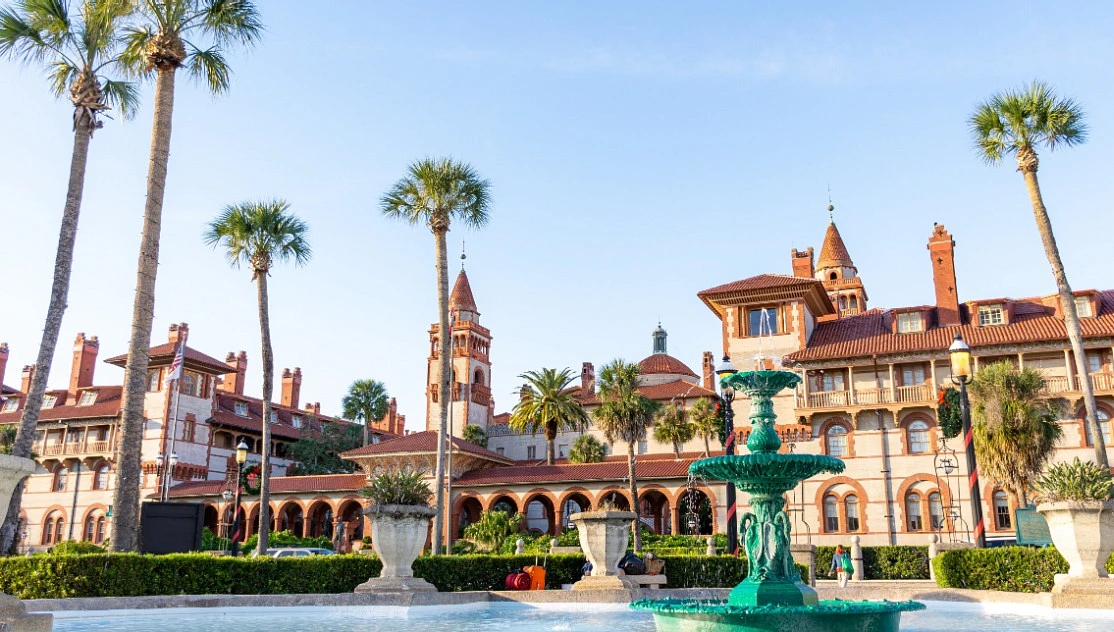
The Nation's Oldest
Europeans have lived there since 1565—half a century before the Pilgrims showed up at Plymouth. Spanish admiral Pedro Menéndez de Ávalas kicked things off.
Its location on Florida's northeast coast was strategic. Spain built it as a military foothold. That legacy is set in stone at the Castillo de San Marcos. The fort is made from coquina, a rock of compressed shellfish fragments. Those walls? Twelve feet thick in places.
What's There Now
Walking through the historic district feels like a weird time-warp. It’s disorienting. Structures from the 1600s stand shoulder-to-shoulder with modern storefronts. Tourists clutching phones queue for ice cream on these ancient streets.
Step inside the Oldest Wooden Schoolhouse, built in the early 1700s. The room is cramped; the ceiling sits low. Its frame is cypress and cedar—a timber skeleton. Every piece is secured with wooden pegs, no nails. Press your palm across its joinery. The feel is different, a testament to pure craft.
St. George Street cuts right through the city's core. They banned cars, so now the whole strip is for pedestrians. It buzzes with shops and bars. Modern commerce operates behind those old colonial-era fronts—a weird jolt of timelines you get used to fast.
Then you have the Cathedral Basilica. This isn't just a museum piece. Parts of the structure date back to the 1740s, with many modifications over the centuries. It remains a functioning Catholic parish. Mass happens every week, a tradition stretching back generations.
Santa Fe, New Mexico
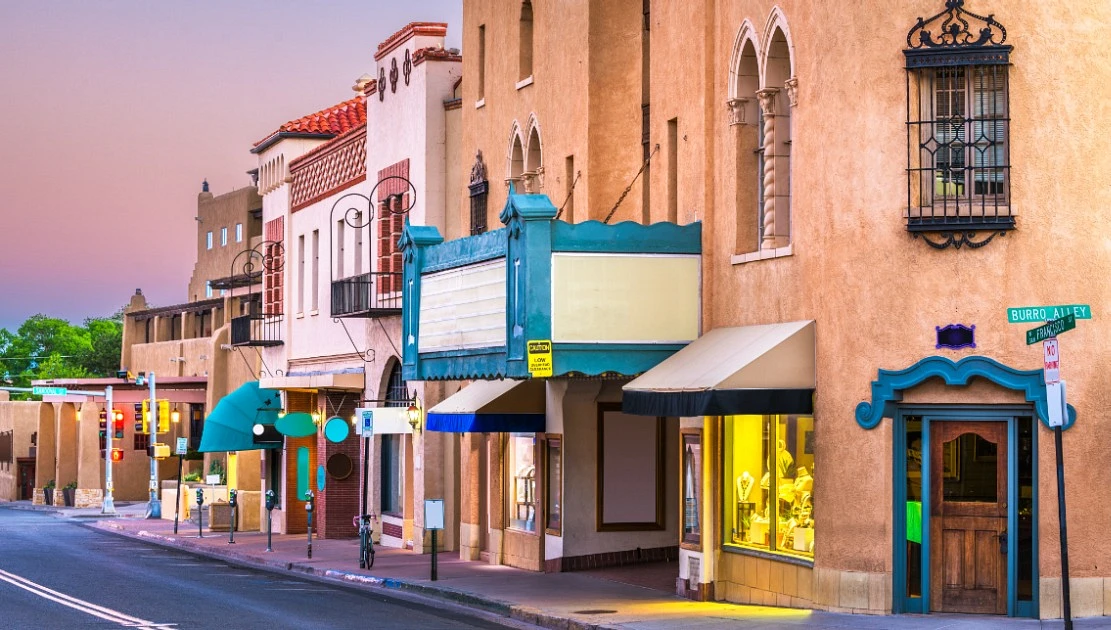
Spain's Northern Outpost
Santa Fe's founding date remains contentious. Scholars typically narrow it down to 1607 or 1610. Spanish conquistadors established the settlement as the capital for the Kingdom of New Mexico. Essentially, it served as a northern outpost for New Spain.
Long before the Spanish showed up, the region was home to indigenous Puebloan people. They had built communities there for centuries. That deep, layered legacy is baked into the very bricks of the place, visible in the architecture, the local cuisine, and the cultural fabric.
Adobe Everything
The city mandates new construction in specific zones to align with traditional adobe style. This isn't some theme park replica. Many structures are the real deal, standing for centuries. Their mud bricks hold up remarkably well against the dry climate.
The Palace of the Governors anchors the plaza. Built around 1610, it's seen four different governments—Spain, Mexico, the Confederacy, and the U.S. Now it's a museum. But its portal stays busy. Native American artisans vend jewelry and crafts there daily. They don't show up on Sundays.
Then you have San Miguel Mission. It bills itself as one of the country's oldest churches. Construction started around 1610. The Pueblo Revolt of 1680 caused damage, so crews had to rebuild parts of it. Its adobe walls are several feet thick. Inside, a dim coolness and quiet hold, a direct shift from the blazing exterior.
The Vibe
Santa Fe houses roughly 85,000 people. It's an art market, too. Galleries jam Canyon Road—some move pieces that cost more than a home. Downtown, the plaza constantly stages events: markets, festivals, concerts.
Food? Think New Mexican cuisine. Not Tex-Mex. Confuse the two, and locals will call you out. Red and green chile end up on nearly every dish.
Jamestown, Virginia
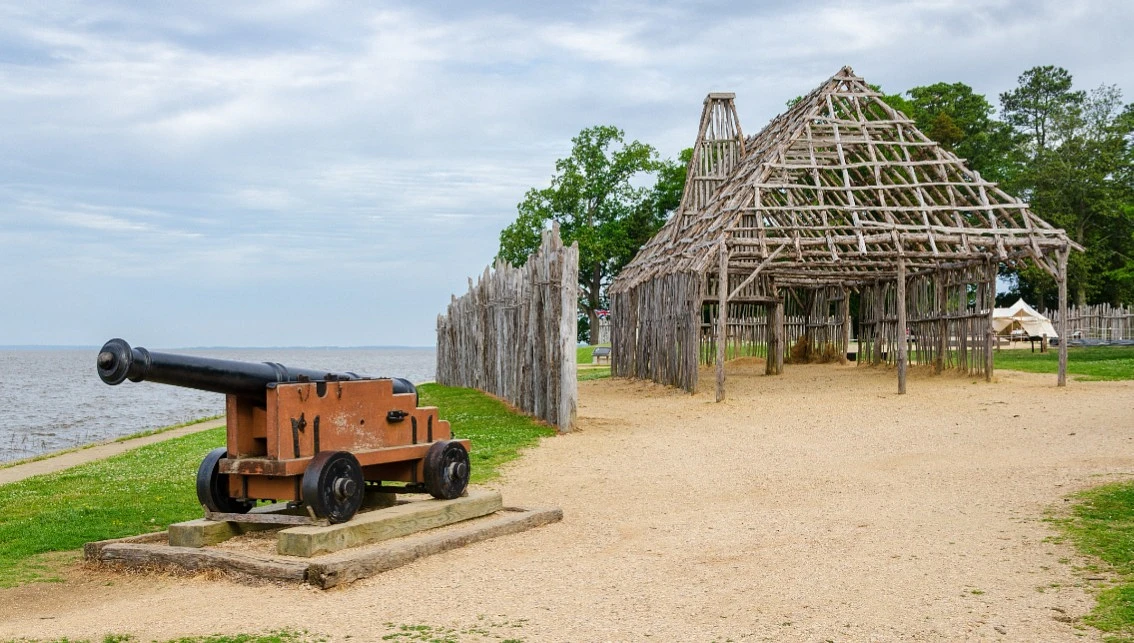
England's First Permanent Settlement
The Virginia Company set up camp at Jamestown in 1607. It was North America's first permanent English colony, but survival was brutal. Disease and starvation ravaged the settlers. Conflict with the Powhatan Confederacy flared. Within a few years, the initial population was mostly gone.
What Survived
Not much of the original Jamestown survives above ground. The place was essentially abandoned in 1699 when the government bounced to Williamsburg. After that, the land just became farmland. Then, in the 1990s, archaeologists started digging. They hit the jackpot, uncovering a ton of artifacts and the precise footprint of the first fort.
Historic Jamestowne runs as a live dig. Visit in summer and catch researchers on site, excavating artifacts. The visitor center showcases their hauls—armor, tools, pottery, even bones. With this evidence, they've partially rebuilt James Fort.
Close by, Jamestown Settlement runs independently. This living history setup has staff dressed in period gear showing off daily life from the 1600s; you can also climb aboard full-scale ship replicas. It teaches you stuff, obviously, but the whole experience feels more contrived next to the gritty, hands-on dig site right there.
Plymouth, Massachusetts
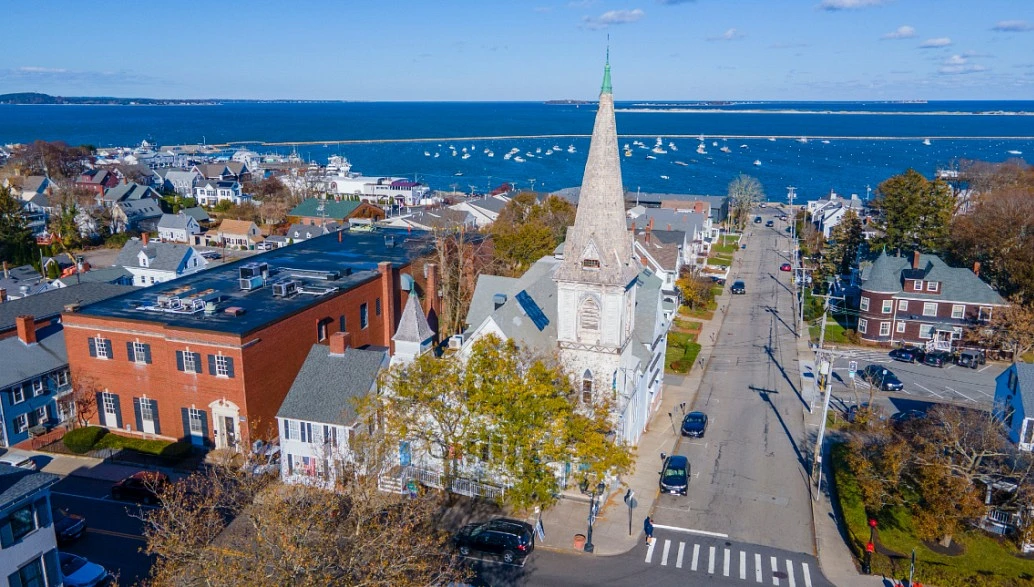
Pilgrim Central
In 1620, the Mayflower passengers founded Plymouth Colony. That whole landing-on-a-rock story? Mostly myth. But they did manage to build a settlement that held on, even with sickness and hunger claiming nearly half of them that first winter.
Seeing History
Plymouth Rock rests under its portico on the waterfront. The thing is just smaller than you'd think. Did the Pilgrims even step on it? Scholars aren't sure, but visitors still schlep there for a photo.
Nearby, the Plimoth Patuxet Museums reconstruct the 1627 English village and a Wampanoag homesite. Staff portray specific colonists, never breaking character and using period speech. The execution is meticulous, though the overall effect can feel staged.
History zones? Step past them, and the town's just another New England spot. Buildings from the 1700s and 1800s are scattered around. Burial Hill Cemetery—graves of Mayflower folks. Downtown's got your usual eats and shops, plus a working waterfront right by the legendary.
Annapolis, Maryland
Colonial Capital
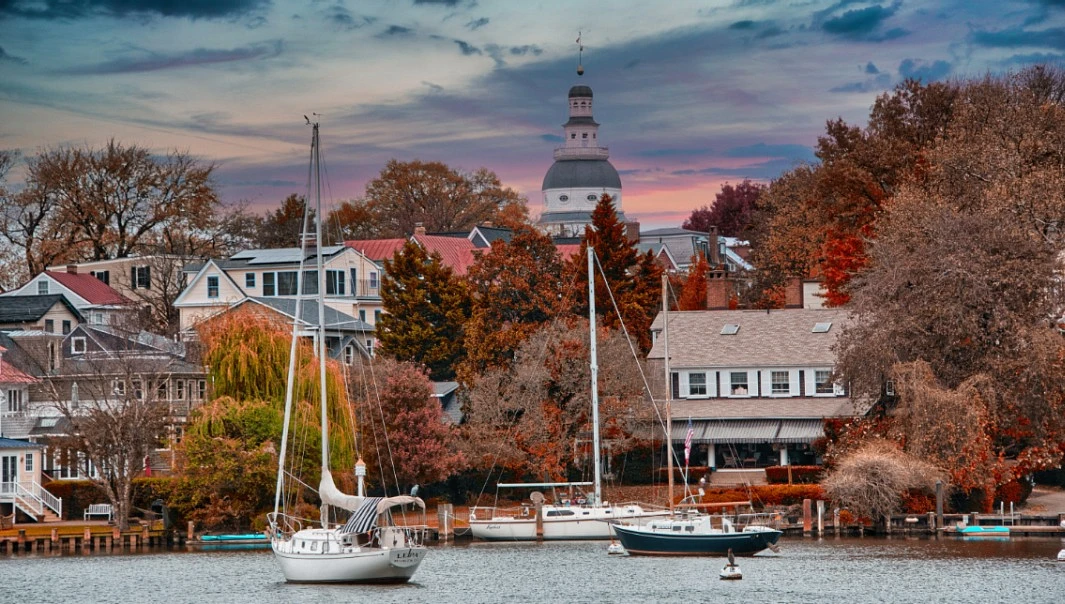
Puritan exiles from Virginia established this settlement in 1649, calling it "Providence." The place took a while to settle on a name—it became Anne Arundel Town before finally getting rebranded as Annapolis in 1694. That same year, it became the seat of power for Maryland. Its national profile shot up later, serving as the US capital, but only briefly, from 1783 to 1784.
Georgian Architecture
Annapolis is gunning for the national top spot in 18th-century architecture. The Maryland State House wrapped up in 1779. It's the oldest state capitol still running without a break. That wooden dome? Built completely nail-free. It's the largest example anywhere.
Stroll the cobbled paths. You're navigating a living neighborhood, not an open-air museum. Sure, the Hammond-Harwood House (1774) and William Paca House (1765) are public museums. Yet countless other 1700s structures are simply private homes, their original fabric woven into the town's daily pulse.
A Working Port
The waterfront hums with purpose. Annapolis runs on sailing, a fact cemented by the United States Naval Academy's substantial presence. Midshipmen in uniform navigate the same streets where colonial figures once shaped a nation.
Then there's Ego Alley, a slender inlet off the main harbor. The name says it all—a parade for boat owners to display their decks. Come weekend, the docks are packed to the gills with sailboats and yachts.
Charleston, South Carolina
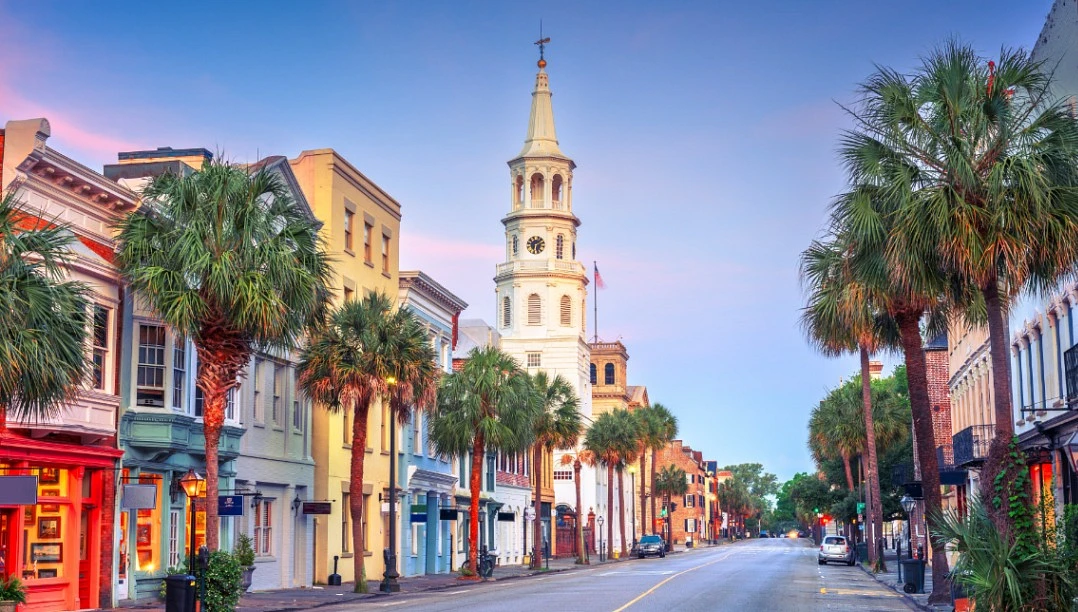
Charles Town started up in 1670. This port was the colonial South's economic engine. Its wealth? That wasn't an accident. It was bankrolled by rice, indigo, and the slave trade. Let's be real—the city is now grappling with these origins openly, a stark contrast to the silence that defined its past.
Antebellum Preservation
Charleston's history is on full display in its streets. Hundreds of structures from the 1700s and 1800s still stand. Rainbow Row? That's thirteen homes built in the mid-18th century, with those pastel fronts you can't miss. Head to The Battery, the waterfront walk, and it's a straight-up crash course in architectural shifts. Different periods, different designs—all lined up together.
A classic move here is the "Charleston single." Picture a narrow house turned sideways on the lot, with a long piazza—that's a fancy word for porch—running its length. This wasn't just for looks. Before AC, that design was pure genius for pulling in the harbor breeze.
The Civil War scarred Charleston, but the city endured better than much of the South. You can still find the pockmarks from Union shells on certain walls. Further out, Fort Sumter dominates the harbor. It’s the site where the conflict began, now preserved as a National Monument.
Beyond the Pretty Facades
The Old Slave Mart Museum now occupies the space that hosted South Carolina's final slave auctions. This is the cash nexus—the direct link to how Charleston built its fortune.
Down at Gadsden's Wharf, the International African American Museum opened in 2023. This was the arrival point for almost half of all enslaved Africans destined for North America. The museum presents the facts. The brutal mechanics of the trade are laid bare.
San Antonio, Texas
Spanish Mission System
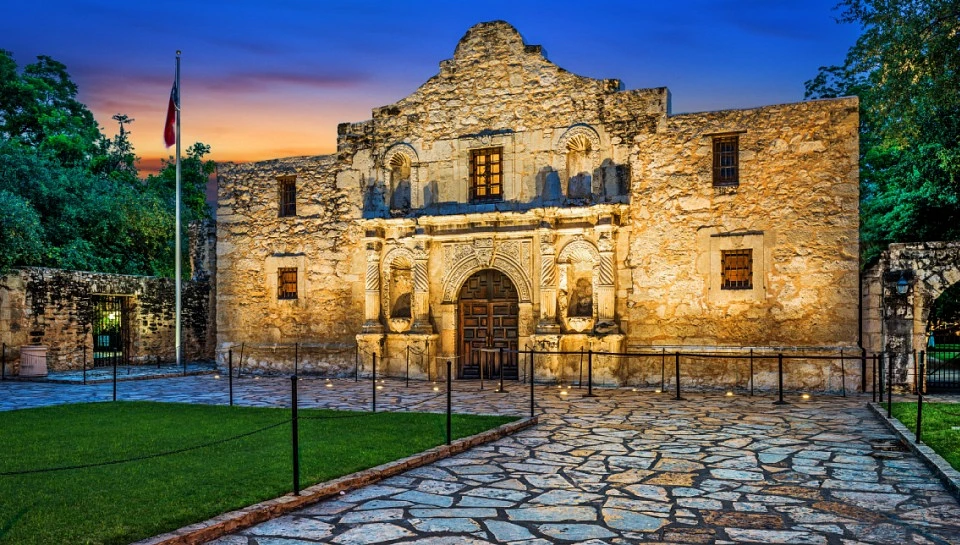
Spanish explorers built Mission San Antonio de Valero in 1718. You know it as the Alamo. A community cropped up around the mission, eventually becoming the city of San Antonio. It wasn't alone. Four other missions were founded in the area. Today, these five sites operate as a single unit, collectively designated a World Heritage Site.
The Alamo's Complex Legacy
The Alamo? Everyone knows the 1836 battle. But its history spans much further back—a Spanish mission for a century prior. That deep, layered past creates a complex and disputed site; the narrative shifts with the speaker.
Visitors are often thrown by the actual battlefield scale. It's surprisingly compact. Today, the old church is totally enveloped by the city. The place is crammed with hotels and souvenir spots.
Some historians push back on the modern focus. They contend the site's narrative is skewed—that the mission's original, quieter purpose gets lost in all the battle hype. The current presentation, they argue, leans into an oversimplified, fight-centric version of events.
The River Walk
The River Walk's construction is a 20th-century project, built in the 30s and 40s. No such paths existed in the 1700s. The river, however, is the constant. Its presence first pulled the Spanish to this spot. Now, that same waterway winds and curls through the city's core, flanked by a dense strip of hotels and eateries.
South of downtown, a mission trail connects the other four sites: San José, Concepción, San Juan, and Espada. They don't get the tourist crowds that swarm the Alamo. The trade-off is palpable. These missions retain more of their original character; their structures and land show less wear. You can navigate the trail by bike or car.
Planning Your Visit
-
St. Augustine and Charleston are accessible year-round, but go in summer and you’ll bake. Santa Fe is different. It’s perched at 7,000 feet. That elevation delivers a cooler, more breathable version of Southwest heat.
-
Prepare to walk. Constantly. Sturdy shoes and water are mandatory. The historic cores are a tangle of narrow lanes, designed centuries before automobiles. This also means parking is a genuine struggle. Strict restrictions are common, with large sections entirely pedestrian-only.
-
Peel back the layers before you arrive. The history of these places isn't always visible at a glance. Dig into the stories of the indigenous peoples who first inhabited the land. Untangle the role slavery played in their foundations. Recognize the different colonial powers that left their mark. This groundwork transforms a simple trip into a deeper experience.
-
Skip the checklist of major attractions. Go where the city actually lives. Wander side streets. Find a packed local joint and grab a seat. Chat people up. The real, unscripted moments happen off the tourist trail. That's where you find the good stuff.
❓FAQ❓
How do historic towns handle tourists and everyday life?
Locals keep their routines intact despite the visitor crowds. They protect the historic core while pushing for modern shops and amenities.
What role do museums play in these towns?
Using artifacts and personal accounts, they bridge the gap between a visitor and a town's many pasts. It's the stuff you can't just see by walking down the street.
Can you visit archaeological digs in historical towns?
Places like Jamestown actually let you observe excavations live. It’s a direct way to understand early colonial life—no barriers.